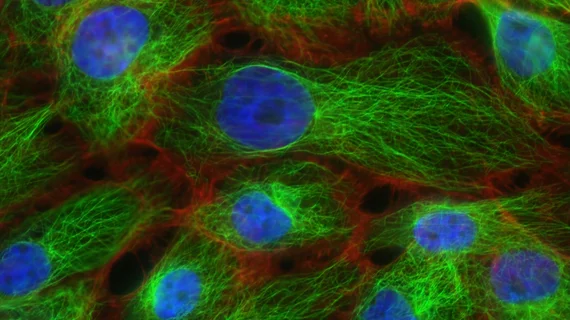
Also called personalized medicine, this evolving field makes use of an individual’s genes, lifestyle, environment and other factors to identify unique disease risks and guide treatment decision-making.
Cynthia Rudin, PhD, is a highly regarded computer scientist who’s been eyeing the advance of artificial intelligence into society with equal parts enthusiasm and concern.
By now it’s a difficult-to-dispute likelihood: AI won’t replace doctors making diagnoses, but doctors who use AI will displace doctors who don’t use AI. The hypothesis gets a fresh airing out from the vantage point of the general public.
Johns Hopkins radiologists have repurposed a deep learning algorithm designed to detect tuberculosis on chest x-rays to, instead, help identify COVID-19.
The European Union has certified AI software for reading mammograms, clearing the way for a South Korea-based AI vendor to sell another of its AI products across the European Economic Area.
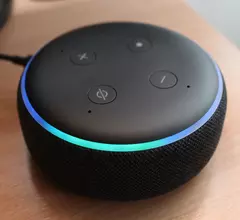
As part of its $5 million pandemic response, Amazon is placing more than 8,000 of its Echo Dot devices across dozens of senior-living facilities in parts of California and Washington State.
It was late April when the CDC added impaired taste and/or smell to its list of COVID-19 symptoms. Thanks to AI and natural language processing (NLP), researchers at the Medical University of South Carolina had beaten the federal agency to the punch.
AI enthusiasts have varying aims and incentives for pushing the technology into healthcare, but many parrot a common set of justifications. Do any of these sound familiar?
Researchers have demonstrated a way to visually explore small-molecule inhibitors that, according to algorithmic suggestions, show potential for targeting COVID-19’s main proteins.