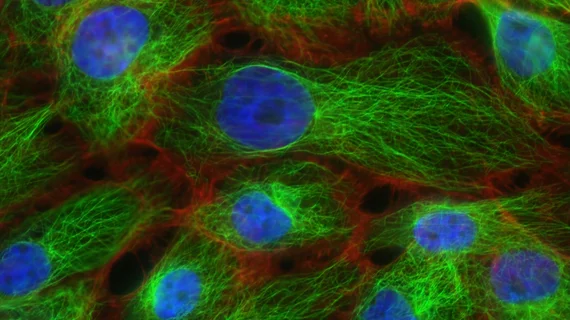
Also called personalized medicine, this evolving field makes use of an individual’s genes, lifestyle, environment and other factors to identify unique disease risks and guide treatment decision-making.
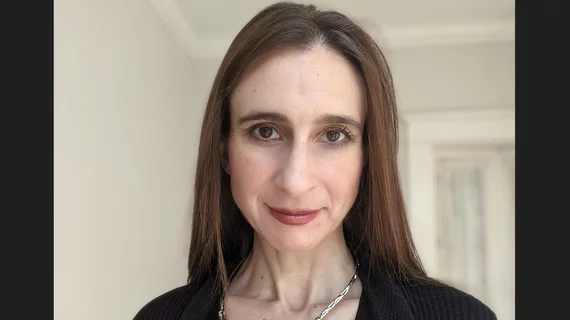
Cynthia Rudin, PhD, is a highly regarded computer scientist who’s been eyeing the advance of artificial intelligence into society with equal parts enthusiasm and concern.
By now it’s a difficult-to-dispute likelihood: AI won’t replace doctors making diagnoses, but doctors who use AI will displace doctors who don’t use AI. The hypothesis gets a fresh airing out from the vantage point of the general public.
A physician whose research produced promising results for using AI to improve the detection of tuberculosis (TB) was awarded the Alexander R. Margulis Award for Scientific Excellence during the annual RSNA conference in Chicago.
University of Oxford researchers were able to predict a patient’s risk of being admitted into emergency care by using machine-learning techniques with electronic health records (EHRs), according to a study published in PLOS Medicine.
A deep-learning algorithm was significantly faster and just as accurate as most radiologists in analyzing chest X-rays for several diseases, according to a study led by Stanford University researchers.
With the help of machine learning, researchers were able to train a computer to analyze breast cancer images and classify tumors accurately, according to a study published in NPJ Breast Cancer.
After receiving FDA clearance for AI software that can detect brain bleeds from CT images, MaxQ AI has announced a deal to integrate the software with medical imaging platforms.
In an interview with AI in Healthcare, JingJia Liu, chief executive officer at Wision AI, discussed the company's new machine-learning algorithm for polyp detection, what’s next and the impact of AI products in the medical industry.