Also called personalized medicine, this evolving field makes use of an individual’s genes, lifestyle, environment and other factors to identify unique disease risks and guide treatment decision-making.
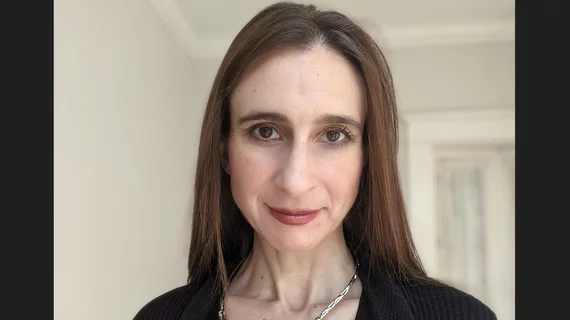
Cynthia Rudin, PhD, is a highly regarded computer scientist who’s been eyeing the advance of artificial intelligence into society with equal parts enthusiasm and concern.
By now it’s a difficult-to-dispute likelihood: AI won’t replace doctors making diagnoses, but doctors who use AI will displace doctors who don’t use AI. The hypothesis gets a fresh airing out from the vantage point of the general public.
A Stanford University research team used machine learning to quickly and accurately diagnose autism in children through short home videos, according to a research article published in PLOS Medicine.
The UMass Memorial Medical Center in Worcester, Massachusetts, is partnering with Israel-based company CLEW Medical to integrate an AI analytics platform into its Tele-ICU program to help monitor patients and make predictions about life-threatening conditions.
Using a deep-learning model, a University of Massachusetts Lowell research team was able to significantly improve the extraction of adverse drug events (ADEs) from electronic health records (EHRs).
Jim Wang, chief executive officer of healthcare conglomerate Nova Vision Group, believes AI will help even the quality of healthcare between rural and urban parts of China, according to a report by CNBC.
NYU Langone Health’s Department of Radiology is planning to release a large-scale dataset that includes more than 1.5 million MRI knee images in an ongoing effort to make MRI scans faster with AI.
After using deep learning on patient scans to track cancer evolution, one research team is hopeful the “promising results” can help improve treatment response and survival predictions for cancer patients.