Also called personalized medicine, this evolving field makes use of an individual’s genes, lifestyle, environment and other factors to identify unique disease risks and guide treatment decision-making.
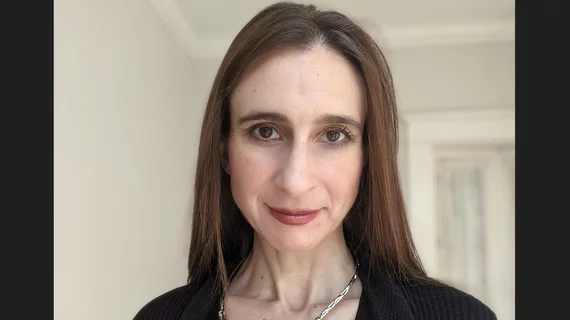
Cynthia Rudin, PhD, is a highly regarded computer scientist who’s been eyeing the advance of artificial intelligence into society with equal parts enthusiasm and concern.
By now it’s a difficult-to-dispute likelihood: AI won’t replace doctors making diagnoses, but doctors who use AI will displace doctors who don’t use AI. The hypothesis gets a fresh airing out from the vantage point of the general public.
AI may be better at spotting cervical cancer and precancer after a study found a deep learning algorithm was more accurate at recognizing the disease than human doctors.
Seventy-seven percent of imaging professionals said machine learning is important, according to a recent report by Reaction Data. The findings signal an increase in use and understanding of machine learning among imaging professionals in the healthcare industry.
The National Science Foundation (NSF) has awarded a $652,820 grant to Florida Atlantic University’s (FAU) College of Engineering and Computer Science to establish the Artificial Intelligence and Deep Learning Training and Research Laboratory.
Researchers from the Massachusetts General Hospital (MGH) in Boston designed a deep-learning algorithm that provides the reasoning behind its decisions, which could help solve transparency issues associated with AI, according to a report by Health Imaging.
An AI-driven approach for detecting an early sign of diabetic retinopathy achieved an accuracy rate of more than 98 percent, according to a study published in Computers in Biology and Medicine. The results could mean a quicker and cheaper solution for diagnosing the disease earlier and possibly prevent loss of eyesight.
Insilico Medicine, a Maryland-based AI company, is partnering with TARA Biosystems to discover and develop new therapies for cardiac disease, the companies announced Jan. 7.
AI applied to an electrocardiogram (EKG) test reliably detected asymptomatic left ventricular dysfunction (ALVD)—a precursor to heart failure—and predicted which patients were most at risk of developing the condition in the future, according to a Mayo Clinic study.
GE Healthcare and the Vanderbilt University Medical Center (VUMC) have partnered to develop diagnostic tools and AI-powered applications to create safer and more precise immunotherapy treatments for cancer patients.