Also called personalized medicine, this evolving field makes use of an individual’s genes, lifestyle, environment and other factors to identify unique disease risks and guide treatment decision-making.
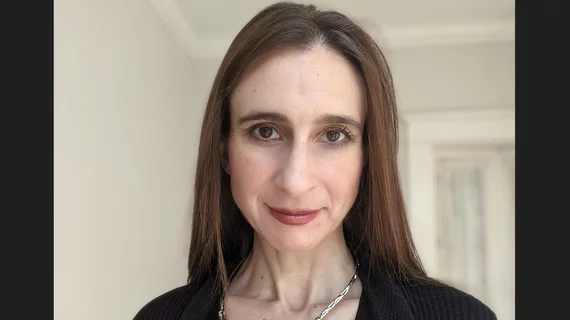
Cynthia Rudin, PhD, is a highly regarded computer scientist who’s been eyeing the advance of artificial intelligence into society with equal parts enthusiasm and concern.
By now it’s a difficult-to-dispute likelihood: AI won’t replace doctors making diagnoses, but doctors who use AI will displace doctors who don’t use AI. The hypothesis gets a fresh airing out from the vantage point of the general public.
Researchers have demonstrated the use of an AI tool that can accurately identify or rule out prostate cancer on digitized pathology slides from core needle biopsies.
The FDA has OK’d the sixth medical AI application developed by Israel-based Zebra Medical Vision. The latest iteration helps breast-specialized radiologists by flagging questionable lesions appearing in 2D mammograms.
Whatever name it takes when it goes down in history, the present “information age” will be inextricably linked to AI. It’s been so since around 2008, although popular perception needed time to catch up with the depth of the development.
AI holds the promise of improving gerontology by making it more predictive, personalized, preventive and participatory. However, to get there, an equal number of pronounced risks must be negotiated.
Patient-facing healthcare workers are neither softened nor hardened in their attitudes toward clinical decision support powered by AI when it’s instead called “AHI,” for augmented human intelligence.