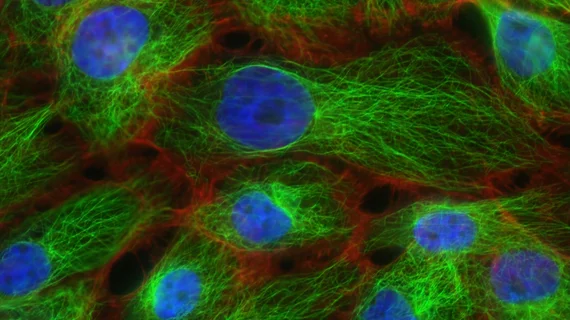
Also called personalized medicine, this evolving field makes use of an individual’s genes, lifestyle, environment and other factors to identify unique disease risks and guide treatment decision-making.
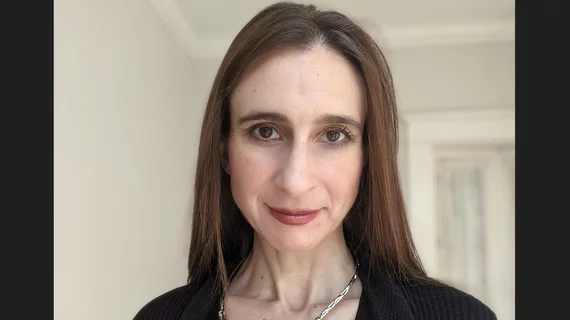
Cynthia Rudin, PhD, is a highly regarded computer scientist who’s been eyeing the advance of artificial intelligence into society with equal parts enthusiasm and concern.
By now it’s a difficult-to-dispute likelihood: AI won’t replace doctors making diagnoses, but doctors who use AI will displace doctors who don’t use AI. The hypothesis gets a fresh airing out from the vantage point of the general public.
Patients of physicians who use computerized alerts are less likely to suffer complications. The systems can also lower readmission rates, lengths of stay and costs, according to a study in the American Journal of Managed Care.
A research team at University of Sydney's Save Sight Institute in Australia was recently awarded a $1.1 million grant for a biopen that treats eye wounds.
Best Buy has entered into an agreement to purchase health services provider GreatCall for $800 million in cash, the consumer electronics retailer announced Wednesday.
There have been more than 4 billion data shares through Allscript’s application programming interfaces (API) since the company started counting the exchanges in 2013.
An artificial intelligence (AI) system designed by Google's DeepMind and London researchers can diagnose eye disease as accurately as some experts, according to a report by the BBC.