Also called personalized medicine, this evolving field makes use of an individual’s genes, lifestyle, environment and other factors to identify unique disease risks and guide treatment decision-making.
Cynthia Rudin, PhD, is a highly regarded computer scientist who’s been eyeing the advance of artificial intelligence into society with equal parts enthusiasm and concern.
By now it’s a difficult-to-dispute likelihood: AI won’t replace doctors making diagnoses, but doctors who use AI will displace doctors who don’t use AI. The hypothesis gets a fresh airing out from the vantage point of the general public.
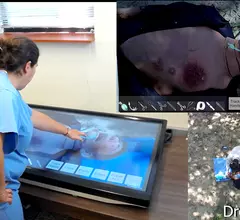
A research team has created a telementoring system that lets physicians who are in remote areas connect with more experienced doctors to help perform complicated procedures.
Researchers may have identified a new biomarker that can help diagnose autism spectrum disorder in some children, according to a study published in Biological Psychiatry.
The Office of the National Coordination for Health Information Technology (ONC) and HHS Office for Civil Rights (OCR) are pushing for increased interoperability and fewer hurdles when it comes to sharing health information.
Rural healthcare providers and facilities face numerous geographic obstacles to providing adequate care. Researchers showed how telehealth videoconferencing can connect remotely located VA medical centers with infectious disease experts to improve antibiotic stewardship.
A mobile application can help healthcare professionals make genetic evaluations by using a snapshot of a person’s face, artificial intelligence and insights from real patients and genetics experts.
According to a report by the Washington Post, the rapid progress with cerebral organoids has prompted calls for an ethics debate surrounding the research behind organoids and the possibility of them eventually having a consciousness.
For people who are blind or have vision problems, the creation of a bionic eye offers hope that one day they’ll be able to see or see better. That hope just got a little closer to reality with the creation of a 3D-printed prototype of a bionic eye.