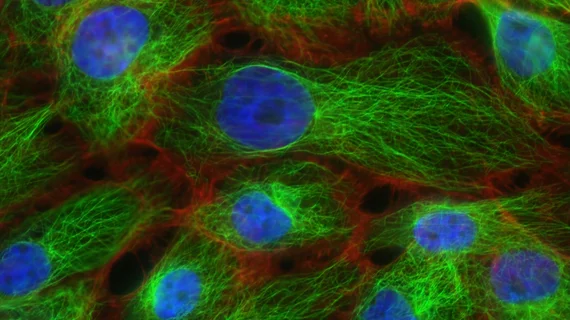
Also called personalized medicine, this evolving field makes use of an individual’s genes, lifestyle, environment and other factors to identify unique disease risks and guide treatment decision-making.
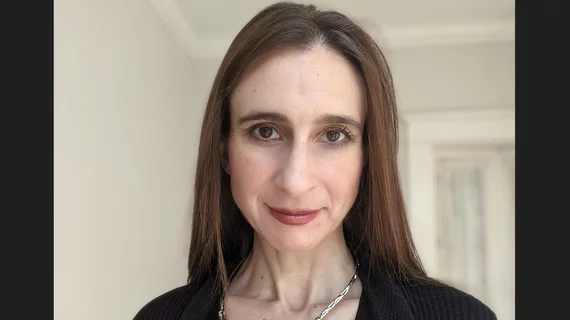
Cynthia Rudin, PhD, is a highly regarded computer scientist who’s been eyeing the advance of artificial intelligence into society with equal parts enthusiasm and concern.
By now it’s a difficult-to-dispute likelihood: AI won’t replace doctors making diagnoses, but doctors who use AI will displace doctors who don’t use AI. The hypothesis gets a fresh airing out from the vantage point of the general public.
Machine learning models could be used to help improve the prediction ability of emergency room (ER) triage methods, after a JAMA study showed the technology was better at making clinical predictions than traditional approaches.
A National Health Service (NHS) hospital trust in the United Kingdom reduced home visits by using an AI-enabled wearable platform to remotely monitor patients recently released from the hospital, according to a case study.
AI for image analysis is predicted to be the top digital health technology for 2019 based on a survey of healthcare professionals, according to Forbes.
A patent application filed by Google indicates that the company is looking to develop an electronic health records (EHR) system that uses AI to predict a patient’s future medical events.
Researchers with MIT’s Computer Science and Artificial Intelligence Lab are working to develop an algorithm that can automatically “debias” data for AI models—an issue that has plagued the technology amid its growing prevalence in the medical field.
An AI-based platform that prepares patients for total joint replacement surgery was associated with shorter hospital stays, according to a study published in the Annals of Translational Medicine.
Russian researchers and radiologists have developed AI software that can distinguish and subsequently mark lung cancers on a CT scan within 20 seconds.