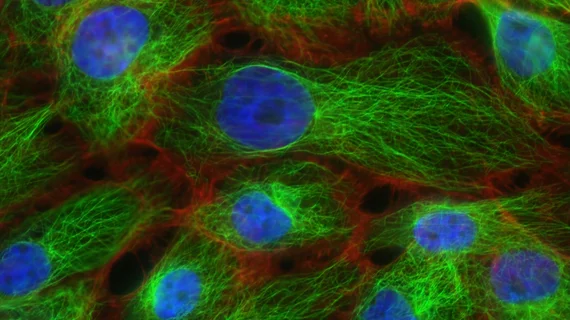
Also called personalized medicine, this evolving field makes use of an individual’s genes, lifestyle, environment and other factors to identify unique disease risks and guide treatment decision-making.
Cynthia Rudin, PhD, is a highly regarded computer scientist who’s been eyeing the advance of artificial intelligence into society with equal parts enthusiasm and concern.
By now it’s a difficult-to-dispute likelihood: AI won’t replace doctors making diagnoses, but doctors who use AI will displace doctors who don’t use AI. The hypothesis gets a fresh airing out from the vantage point of the general public.
Researchers from the Imperial College London and the University of Melbourne created a new AI algorithm that is four times more accurate in predicting survival rates among ovarian cancer patients. The tool was also able to determine the most effective treatment for patients who exhibit ovarian cancer. Research findings were published in Nature Communications.
Flagler Hospital, a 335-bed community hospital based in St. Augustine, Florida, is projected to save more than $20 million after AI technology helped it reduce costs, average length of stay and readmissions for pneumonia patients.
Medical device company Sight Diagnostics has raised $27.8 million in funding to expand its system that uses AI to analyze blood tests, according to a report by VentureBeat.
IBM Watson Health is partnering with the Broad Institute of MIT and Harvard to use AI and genomics to help clinicians better predict the onset of serious cardiovascular diseases, the company announced Feb. 13.
Researchers at West Virginia University (WVU) were awarded a $1 million grant from the National Institute of Justice to develop novel AI techniques to combat the opioid epidemic and opioid trafficking. The funding will be provided over a three-year period.
What to do with wearables and the deluge of data they offer is a big question in the minds of IT leaders and a topic addressed well at HIMSS19 by Karl Poterack, MD, the medical director, applied clinical informatics, Mayo Clinic.
The Vatican and Microsoft are offering a nearly $7,000 prize for an international competition that aims to promote ethics in AI, according to a report by the Associated Press.
An NHS hospital in Scotland was honored by Microsoft during the HIMSS conference for its effort with KenSci to leverage AI and machine learning to reduce emergency hospital admissions among the highest risk chronic obstructive pulmonary disease (COPD) patients.