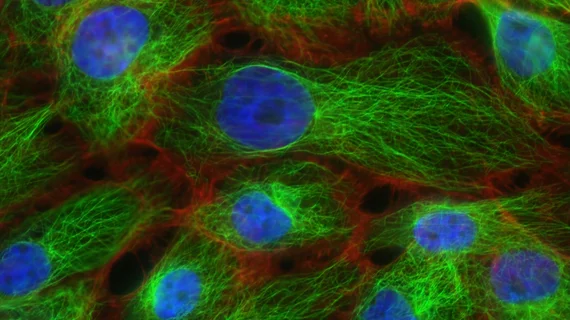
Also called personalized medicine, this evolving field makes use of an individual’s genes, lifestyle, environment and other factors to identify unique disease risks and guide treatment decision-making.
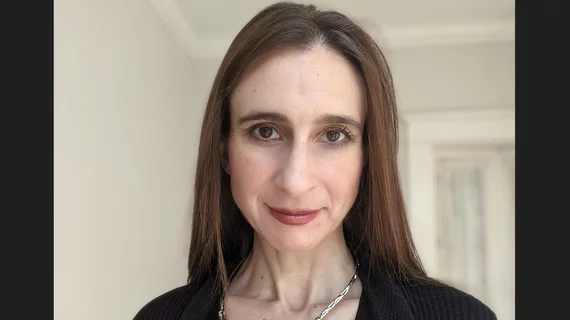
Cynthia Rudin, PhD, is a highly regarded computer scientist who’s been eyeing the advance of artificial intelligence into society with equal parts enthusiasm and concern.
By now it’s a difficult-to-dispute likelihood: AI won’t replace doctors making diagnoses, but doctors who use AI will displace doctors who don’t use AI. The hypothesis gets a fresh airing out from the vantage point of the general public.
The Patient-Centered Outcomes Research Institute has published an initial draft of shared priorities and a nationwide agenda for comparative clinical effectiveness research, and is seeking public comment on its proposals.
Our third annual CMIO Compensation Survey offers some interesting insights on the job and the people serving in the role. Several CMIOs share their thoughts on the numbers, including the shift to younger CMIOs, less satisfaction with salaries and more CMIOs looking for a new job.
Milwaukee-based Herzing University has acquired the Medical Technology Management Institute, which provides continuing education for radiologic technologists and diagnostic medical physicists.
My Medical Images, a newly-released DICOM viewer application (app) from Peridot Technologies, allows users to browse, load and share medical images from their Microsoft HealthVault accounts with friends, family or physicians.
Women with two types of high-risk lesions (papilloma and radial scar) with normal MRI results can avoid surgical excision and instead undergo clinical and imaging follow-up, according to a prospective study published in the February issue of American Journal of Roentgenology.
Venture investments held strong and steady across healthcare in 2011, with medical devices finishing a close second to biopharmaceuticals in dollars invested and healthcare IT seeing a substantial increase over the previous year.
In 2010, the healthcare community accounted for only 1 percent of the 761 data breaches examined in a January 2011 report on data security published by communications company Verizon--which is a decrease from the previous year.