Also called personalized medicine, this evolving field makes use of an individual’s genes, lifestyle, environment and other factors to identify unique disease risks and guide treatment decision-making.
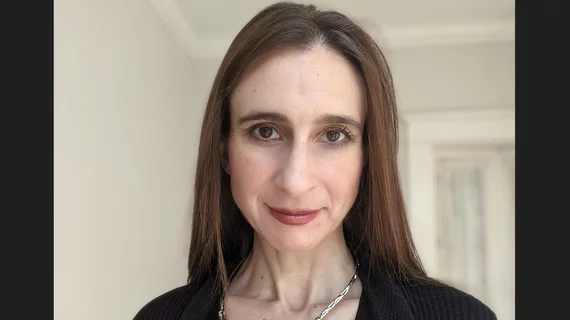
Cynthia Rudin, PhD, is a highly regarded computer scientist who’s been eyeing the advance of artificial intelligence into society with equal parts enthusiasm and concern.
By now it’s a difficult-to-dispute likelihood: AI won’t replace doctors making diagnoses, but doctors who use AI will displace doctors who don’t use AI. The hypothesis gets a fresh airing out from the vantage point of the general public.
The costs of care for the average American family has more than tripled since 2001, surpassing $25,000 even as the rate of health cost increases slowed to a record low, according to the Milliman Medical Index.
Primrose Healthcare has launched an alcohol app designed to help hepatitis C patients overcome alcohol addiction by providing personalized education and resources through goal setting, alerts, coaching and ongoing feedback.
CMS has released a public use file for the 2013 Medicare Current Beneficiary Survey (MCBS), allowing researchers easy access to select data to analyze health disparities and access to care.
The Center for Medical Interoperability (CMI) held a panel discussion with CMI Executive Director Ed Cantwell, Zane Burke, president of Cerner, and Mike Schatzlein, senior vice president at Ascension Health.
Three weeks after healthcare researchers revealed that medical errors are the third leading cause of death in the U.S., the federal government’s Agency for Healthcare Research and Quality (AHRQ) has released a new online toolkit designed to help providers communicate with patients and loved ones when something goes wrong.
The National Institutes of Health has awarded a five-year, $1.6 million grant to a firm focusing on developing software to ease determining eligibility for public health programs.
Given the same clinical scenarios, surgeons came up with wildly different opinions on the potential risks and benefits, which was a major factor in their decision whether or not to operate
Seeking to make it easier for combat veterans living in remote areas to access mental-health services, the Department of Veterans Affairs is opening five “telemental health” hubs.