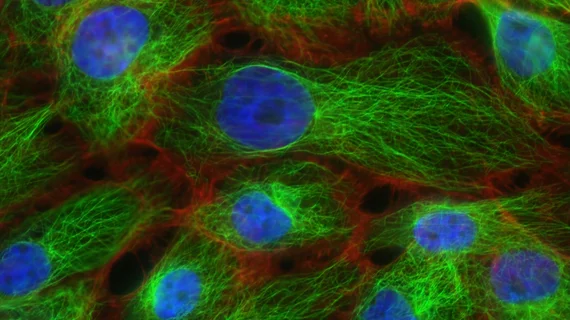
Also called personalized medicine, this evolving field makes use of an individual’s genes, lifestyle, environment and other factors to identify unique disease risks and guide treatment decision-making.
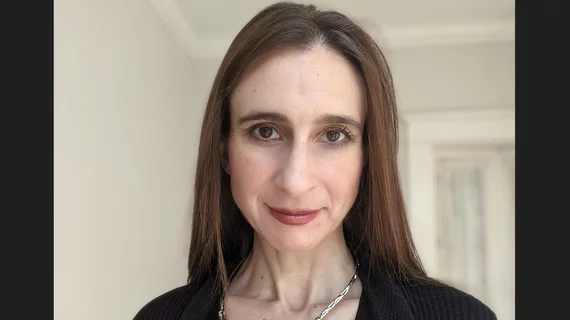
Cynthia Rudin, PhD, is a highly regarded computer scientist who’s been eyeing the advance of artificial intelligence into society with equal parts enthusiasm and concern.
By now it’s a difficult-to-dispute likelihood: AI won’t replace doctors making diagnoses, but doctors who use AI will displace doctors who don’t use AI. The hypothesis gets a fresh airing out from the vantage point of the general public.
In the latest report on patient engagement by TeleHealth Services, a provider of patient engagement, only 20 percent of hospitals have an interactive patient engagement system while the other 80 percent still rely on paper handouts.
Royal Philips has developed a way to keep seniors safer in senior living environments with the CarePoint 5.0, a resident safety and wander management solution able to track and assist seniors with the touch of a button.
Mobile application and telehealth ventures are becoming more and more commonplace in healthcare. Still, the industry as a whole has a long way to go to match the ease and simplicity of using your phone to check a bank account or get directions.
Researchers at Georgetown University Medical Center's Institute for Reproductive Health (IRH) have started a study including 1,200 women in an analysis of the efficiency of a smartphone app that calculates a woman's chance for pregnancy on a daily basis.
Mayo Clinic and molecular diagnostics company Transplant Genomics are teaming up to develop and commercialize diagnostic tests that will enable personalized immunosuppression for suitable organ transplant recipients.