Also called personalized medicine, this evolving field makes use of an individual’s genes, lifestyle, environment and other factors to identify unique disease risks and guide treatment decision-making.
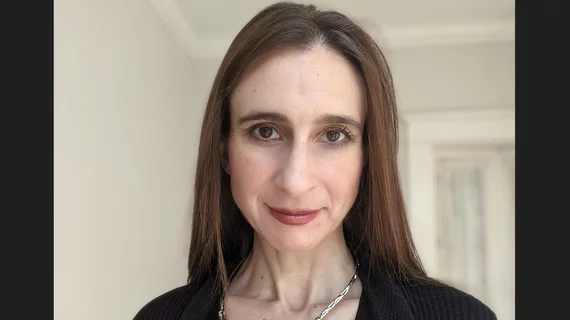
Cynthia Rudin, PhD, is a highly regarded computer scientist who’s been eyeing the advance of artificial intelligence into society with equal parts enthusiasm and concern.
By now it’s a difficult-to-dispute likelihood: AI won’t replace doctors making diagnoses, but doctors who use AI will displace doctors who don’t use AI. The hypothesis gets a fresh airing out from the vantage point of the general public.
As the number of minimally invasive surgical procedures grows, the value of the surgical equipment market is expected to escalate as well, to more than $20 billion by 2025.
With photosynthesis, plants use sunlight to produce their own food. Dutch scientists have harnessed this type of approach to create an artificial leaf that uses a type of photosynthesis to create drugs wherever the sun shines.
The remote patient monitoring device market is expected to reach $1.9 billion in 2025 on a global basis, according to a new report from Research and Markets.
One key to staying healthy and out of the hospital, whether dealing with a chronic condition or a simple ear infection, is taking medication as prescribed. Yet only half of American adults dutifully refill and take prescriptions as directed.
Social media might be detrimental to mental health. Research from the University of Pittsburgh Center for Research on Media, Technology and Health has found a link between increased time on social media and increased rates of depression and anxiety in young adults.
The number of working age Americans with hearing loss has decreased, a finding revealed in a new paper from federal researchers, reports The New York Times.