Also called personalized medicine, this evolving field makes use of an individual’s genes, lifestyle, environment and other factors to identify unique disease risks and guide treatment decision-making.
Cynthia Rudin, PhD, is a highly regarded computer scientist who’s been eyeing the advance of artificial intelligence into society with equal parts enthusiasm and concern.
By now it’s a difficult-to-dispute likelihood: AI won’t replace doctors making diagnoses, but doctors who use AI will displace doctors who don’t use AI. The hypothesis gets a fresh airing out from the vantage point of the general public.
Researchers from the University of Chicago Medicine have developed a comprehensive care physician model capable of improving quality while lowing hospitalization rates. Findings were published in the May 20 edition of New York Times Sunday Magazine.
Researchers from Swansea University Medical School and the College of Human and Health Sciences have used electronic medical records (EMRs) to improve clinical trials by expanding remote monitoring. Findings were published May 16 in Scientific Reports.
Researchers from the University of Waterloo in Ontario, Canada, have developed artificial intelligence (AI) capable of using wearable-collected data to predict the onset of health problems. Findings were published Feb. 23 in the Journal of Applied Physiology.
Mobile health (mHealth) applications are seen as useful tools by physicians treating women with gestational diabetes mellitus (GDM), according to a study published May 14 in JMIR mHealth and uHealth.
Teledermatology for suspected skin cancer costs more than usual care—but it speeds up the time to clinical resolution by nearly a month, according to a study published online May 9 in JAMA Dermatology.
Consumer sleep technologies like wearables and mobile apps are adept at collecting patient-generated health data, but lacking validation data and FDA clearance are hindering utilization, according to a position statement published in the May 15 issue of the Journal of Clinical Sleep Medicine.
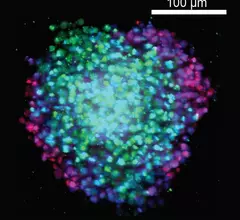
Researchers at the Scripps Research Institute, in a study published online May 10 in Octogene, developed spheroids that can be used for high throughput screening, which uses the structures to test for reactions to various drugs.