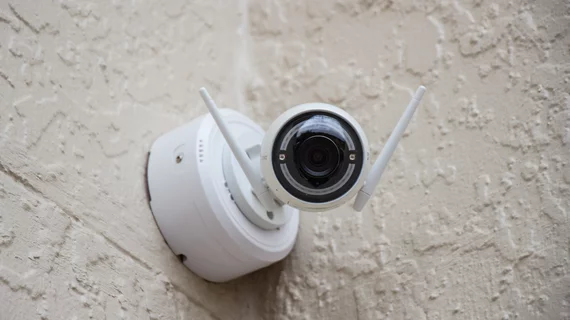
Among Internet of Things devices used in medical settings, Internet Protocol (IP) cameras are the most vulnerable to hackers. Meanwhile nurse call systems hold that troubling distinction among general medical devices.
The FDA-led Sentinel Initiative is tapping Oracle’s life-sciences division, Cerner Enviza, to spearhead development of AI tools for rendering EHR-bound clinical notes as usable pointers for clinicians and researchers.
The popular chat-based AI model was able to answer straightforward questions with considerable accuracy. However, it still has certain issues that need to be addressed.
People suddenly stricken with a cardiovascular crisis often survive and recover as long as they’re transported ASAP to a hospital that has two attributes: expertise in emergency heart care and capacity to accommodate the incoming episode.
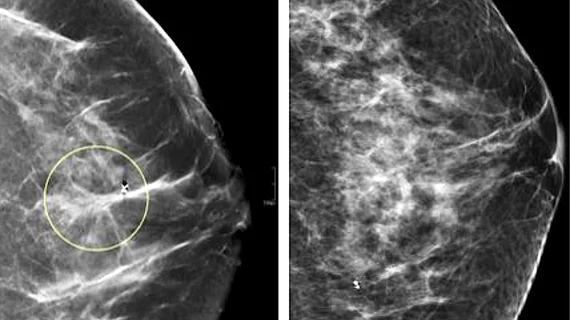
Comparison of a 2D digital mammogram and breast tomosynthesis 3D mammography showing ability to better evaluate details in areas of dense breast tissue, rather than seeing areas of dense breast tissue overlapping, which can mimic or hide a cancer. Photo from UCSF.
Since being approved by the U.S. Food and Drug Administration in 2011, DBT has become the most common method for breast cancer screening, and as of September 2022, 84% of all U.S. mammography screening facilities housed DBT units.