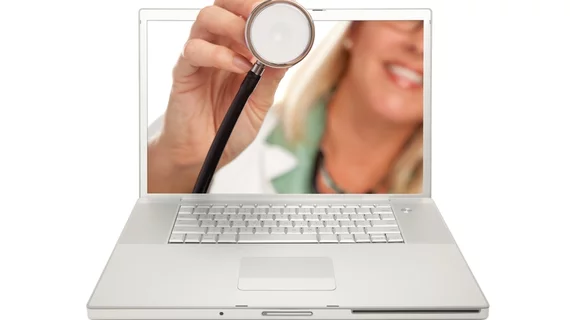
Google Cloud is injecting $100 million into a supplier of telehealth platforms, partly to build out AI systems for helping hospitals remotely handle patient inquiries, intake and triage.
Researchers in Canada are working to develop AI models for diagnosing and treating mental illness. One application in their sights involves automated interpretations of brain scans.
When a virus mutates, the researchers explained, it can be benign or even make the virus less dangerous to humans. In this instance, however, many detected mutations have a significant chance of becoming more infectious strains of COVID-19.
More than half of Americans, 54%, have seen doctors remotely during the COVID crisis. However, some 48% might not touch telehealth again if their data were to get hacked during a telehealth-related breach.
Along with new or improved algorithmic applications for chest imaging, watch for word of an AI-powered breathalyzer and other diagnostic techno-weapons aimed at COVID. What they’ll all have in common is full-throated NIH support.
NIH researchers have demonstrated the wide—potentially worldwide—applicability of a COVID-detecting AI system that was trained on chest CTs from four hospitals in three countries.
Computerized clinical decision support has strong upsides and few to no downsides for both clinicians and patients, according to a systematic literature review.
Researchers at New York University have demonstrated an AI-based way to send COVID patients from the ER to the most appropriate care setting according to their individualized risk.
As its techniques and technologies mature, medical AI will increasingly be used to predict the health trajectories of both outpatients and inpatients. But how will it do at converting educated projections into preventative care?