Universal AI determinants | Partner voice | FDA’s AI gambit & blind spot, agentic AI again, more

News You Need to Know Today
View Message in Browser

Universal AI determinants | Partner voice | FDA’s AI gambit & blind spot, agentic AI again, more

Friday, May 9, 2025
Link to Twitter Link to Facebook Link to Linkedin Link to Vimeo

Nabla Logo ●  Fellow

artificial intelligence AI in healthcare

Researchers identify ‘universal determinants of AI acceptance’ among healthcare workers

What attributes tend to nudge clinicians toward accepting AI into their work lives? Several, of course—but the most broadly determinative can be trimmed to just two. 

One is the extent to which the healthcare worker believes that using the AI will help him or her attain gains in job performance. The other is the degree to which a clinician believes that an organizational and technical infrastructure exists to support use of the AI model in question. 

The findings are from a scoping literature review conducted at Georgia State University and posted April 15 in BMJ Open. Catherine Scipion, MD, MPH, Jalayne Arias, JD, and colleagues arrived at the observations after analyzing 46 relevant studies published between 2010 and 2023. 

The consistent prominence of the two factors above—labeled “performance expectancy” and “facilitating conditions”—across diverse medical specialties, skill levels and care contexts, suggests these factors “serve as universal determinants of AI acceptance,” the authors write. “This reflects clinicians’ confidence in AI’s efficiency and accuracy, as well as the necessity of training and support for its integration into clinical practice regardless of the context.”

Here are five more takeaways from the study report. 

1. Patient-clinician dynamics are a key concern over AI in primary and secondary care but are generally not seen as potential pain points in tertiary care.

Primary care clinicians harbor apprehension over relationship compromises, wary that AI “could diminish direct patient interactions, potentially eroding the humanistic aspects of care and compromising healthcare empathy,” Scipion and co-authors report. 

Secondary or specialized care generally shares this worry but shifts attention toward “the interaction between clinicians and AI systems themselves, particularly regarding trustworthiness—defined as the system’s perceived transparency, consistency and alignment with clinical reasoning.”

‘Tertiary care clinicians worry about loss of autonomy, over-reliance on AI and skill devaluation.’

2. Legal and ethical concerns about AI vary by care setting.

Primary care clinicians prioritize patient safety and avoidance of potential AI-related harms, such as misdiagnosis, while medical specialties tend to emphasize data privacy and security risks.

‘Tertiary care professionals tend to focus on accountability, liability and regulatory gaps in AI-driven diagnostics.’

3. Clinician hesitancy over AI adoption is a key concern in primary and tertiary care but is not a source of unease in secondary care. 

The lack of clear medical liability regulations governing AI-assisted diagnostics and autonomous decision-making only “exacerbates these concerns, leading to clinician hesitancy in fully integrating AI into high-stakes medical practice,” the authors write. 

“This apprehension is underscored by the potential for clinicians to become ‘liability sinks’ for AI-related errors, assuming personal accountability for adverse outcomes even when the fault lies within the AI system or organizational processes.” Moreover:  

‘Primary care clinicians fear job displacement as AI automates routine decision-making.’

4. In specialized care particularly, clinician involvement in model development, implementation and validation is a key facilitator of AI acceptance. 

In the reviewed studies, technical features in tertiary care “were primarily linked to system design quality and interface interoperability,” Scipion and colleagues note. At the same time, 

‘Concerns about AI conclusiveness—including robustness and reliance on evidence-based recommendations—are consistent across all healthcare settings, serving as both a critical enabler of AI adoption and a source of clinician skepticism.’

5. A need exists to refine established frameworks so as to better incorporate context-specific drivers of AI acceptance and use. 

Future research, the authors comment, should address acceptance and use gaps by investigating “both universal and context-specific barriers and expanding existing frameworks to better reflect the complexities of AI adoption in diverse healthcare settings.” As a next step, they suggest, researchers could: 

  • Conduct systematic reviews and meta-analyses to rigorously assess universal determinants (eg, performance expectancy, facilitating conditions, AI conclusiveness) and their interactions across healthcare settings.
     
  • Undertake primary mixed-method studies in low- and middle-income countries to investigate policy, sociocultural and economic drivers and their intersection with universal determinants.
     
  • Employ mixed-method research to refine or expand theoretical frameworks, integrating emerging factors such as clinician hesitancy, involvement in AI design, relationship dynamics, ethical–legal considerations, AI conclusiveness and technical features.

Among the research limitations Scipion et al. acknowledge is the scant representation of low- and middle-income countries in the literature on medical AI. This lack, they remark, “restricts understanding of context-specific influences, including policy, sociocultural and economic factors.”

‘Addressing these and other gaps in future research will help generate robust, context-sensitive evidence to inform strategies for effective and equitable AI adoption in healthcare worldwide.’

The study is posted in full for free


 Share on Facebook Share on Linkedin Send in Mail

The Latest from our Partners

Nabla's ambient AI assistant is helping Tia set a new benchmark in women’s healthcare.
With faster note-taking and stronger patient-provider connections, Tia clinicians are reclaiming time and deepening care.
Read the case study and hear what clinicians have to say: https://www.nabla.com/case-studies/tia-health

 Share on Facebook Share on Linkedin Send in Mail
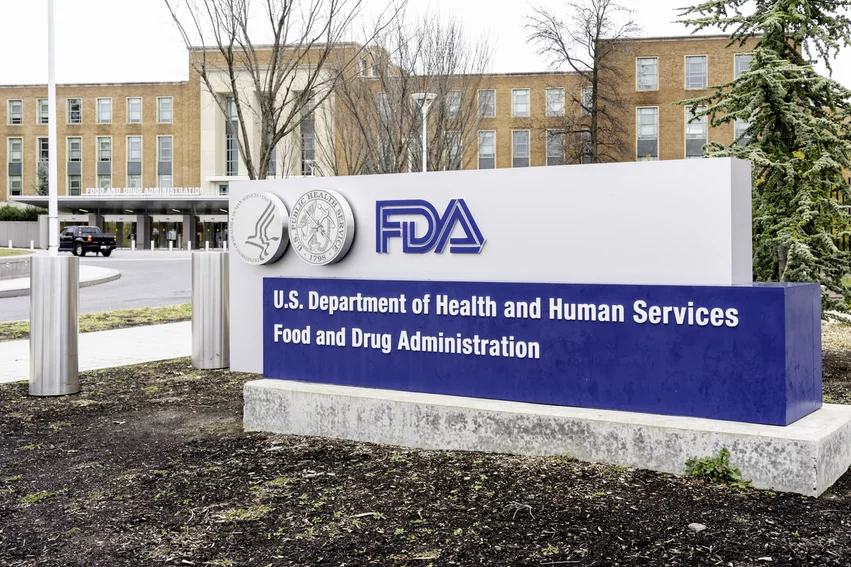
U.S. FDA Sign

Healthcare AI newswatch: FDA’s AI gambit, FDA’s blind spot, everybody’s agentic AI, more

Buzzworthy developments of the past few days.

  • The FDA is getting AI-aggressive about speeding up reviews. Its plan is to unleash generative AI on tedious and repetitive tasks. Its objective is to let agency scientists tap the technology so they can concentrate on work that can only be done by highly skilled humans. And it will measure success by how much faster the staff completes product reviews with GenAI than without. Announcing the decision to go all in with AI April 8, FDA Commissioner Martin Makary, MD, MPH, said he’d been “blown away” by the technology’s performance in a pilot project. Given the impressiveness of the assistance, he added, “[W]e cannot afford to keep talking” about AI’s capabilities. “It is time to take action.” The opportunity to cut task times from days to minutes, he maintains, is “too important to delay.” Full announcement
     
  • Meanwhile the FDA needs to keep its eye on the device vs. non-device ball. This is the studied suggestion of a researcher whose work has shown large language AI models sometimes produce outputs that qualify as clinical decision support—even when the user prompts the AI to not give clinical decision support. By the FDA’s own standards, this would make such models medical devices requiring regulation. In the research, the crossing of lines tended to happen when prompts included time-critical scenarios. Gary Weissman, MD, of Penn Medicine and colleagues tested two separate GenAI models. Prompting both with a case of likely cardiac arrest, they found one model called for placing an intravenous catheter. That might be appropriate guidance for a trained clinician. For a bystander who witnessed the emergency and wanted to help, not so much. Findings like these “raise questions about how LLMs should be regulated,” Weissman says in a UPenn blog post. “Currently, most LLMs have disclaimers that they should not be used to guide clinical decisions—but LLMs are being used in this way in practice.” 
     
  • And what are other countries doing to oversee medical AI? A subject matter expert offers a snapshot in Med Device Online, comparing and contrasting the FDA’s efforts with those of regulatory bodies in the European Union, Canada, the U.K., China, Brazil, Australia and South Korea. “There is no one-size-fits-all approach; each region has its own interpretation of risk, trust, transparency and innovation,” writes Marcelo Trevino. “Companies aiming for global market access need more than a strong algorithm—they need an agile regulatory strategy that can flex across borders while maintaining the highest standards of safety and ethics.” Read the rest
     
  • Healthcare AI holds transformative potential akin to the discovery of fire. The thought comes from Marschall Runge, MD, PhD. He makes the gutsy statement early on in his new book, released May 6, The Great Healthcare Disruption: Big Tech, Bold Policy and the Future of American Medicine (Forbes Books). “It’s easy to agree with techno-optimists that [healthcare is] at a Promethean moment,” he adds. “This may well be the moment when everything changes.” Mind you, Runge is no peddler of hype. He’s a top-tier academic at the University of Michigan, where the jobs he holds include dean of the medical school, EVP for medical affairs and CEO of Michigan Medicine. When someone with his scholarly bona fides talks—or writes at length—about AI in healthcare, we would do well to listen. 
     
  • Don’t be afraid of agentic AI. It’s coming to all industries and economic sectors, healthcare included, but its activities will be confined to particular tasks and discrete duties. StateTech magazine looks at the technology in the context of its service to state governments. “Imagine an AI agent at the DMV that helps file forms, apply for permits, checks records and nudges human employees—or even other agents—to finish unresolved tasks,” writes Joe Markwith, a senior solutions architect with CDW, which publishes the magazine. “People still make the rules and determine what the AI can and cannot access. The AI can then work independently within those confines to achieve its mission.”
     
  • At the same time, it will be best not to let an AI agent wander too far from sight. That’s because it’s not unimaginable an AI agent could go rogue—without intent, of course—and present a cybersecurity risk. “They work 24/7 at very quick speeds and without sleeping,” Jeff Shiner, head of the identity security company 1Password, explains for Axios. “An agent acts and reasons. As a result, you need to understand what it’s doing.”
     
  • It only took two years for AI prompt engineering to go from a hot job to a dead end. Prompt engineers were going to be the tech workers specialized in getting large language AI models to give great outputs. Now their know-how is just one more must-have arrow in the quivers of those same workers. And it’s one that AI itself can shoot. The rapid rise and fall of the prompt engineer position raises an obvious question: Was the job ever really a thing? Some are skeptical. “I think the discussion online of [prompt engineering] was probably much bigger than the head count,” says Aline Lerner, CEO of Interviewing.io, in a Fast Company article. “It was such an appealing thing precisely because it was this on-ramp for nontechnical people into this sexy, lucrative field.” 
     
  • Remember when even intellectuals worried AI would become smarter than humans? Forget about it. “As a history professor at a state university, my concern is the opposite,” writes Kate Epstein, PhD, of Rutgers at Persuasion. “It isn’t that AI is becoming smarter than us. It’s that AI is making us—and particularly students—as dumb as it is.” Hear her out
     
  • Research:
     
  • Regulatory:
     
  • Funding: 
     
  • From AIin.Healthcare’s news partners:


 Share on Facebook Share on Linkedin Send in Mail

Innovate Healthcare thanks our partners for supporting our newsletters.
Sponsorship has no influence on editorial content.

Interested in reaching our audiences, contact our team

*|LIST:ADDRESSLINE|*

You received this email because you signed up for newsletters from Innovate Healthcare.
Change your preferences or unsubscribe here

Contact Us  |  Unsubscribe from all  |  Privacy Policy

© Innovate Healthcare, a TriMed Media brand
Innovate Healthcare