 | ● |  |
|
|
|
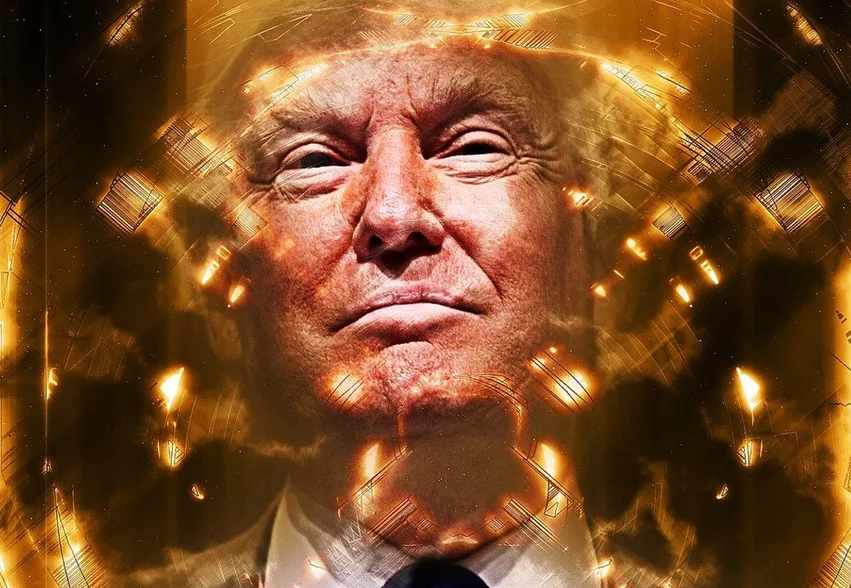
| | | Buzzworthy developments of the past few days. - In the eyes of the world, the U.S. has done an about-face on AI. Where a cautious President Biden wanted to confine American AI know-how to America, a freewheeling President Trump wants to turn it loose—at least to select friends and allies. He believes this “new golden era of partnership” will bigly benefit both sides. And he evidently trusts our freshly incentivized pals not to pass our playbook along to frenemies China and Russia, much less to prickly players like Iran and North Korea. All of this became apparent during Trump’s whirlwind tour of the Middle East this week. Fact sheets emanating from the White House have splashed Trump’s securing of a $1.2 trillion business pledge from Qatar and a $600 million investment from Saudi Arabia. Stated healthcare commitments include an investment of $5.8 billion by a Saudi company to launch an IV fluid facility in Michigan. Also notable is a move by Trump to overturn Biden’s “AI diffusion” rule, which bars American companies from exporting high-powered chips and other components key to AI advancement. In practice, that rule enabled the Chinese multinational Huawei to market a chip that rivals the best product in Nvidia’s catalog.
- One question that seems to hang unanswered so far: What sorts of returns will these big spenders be looking to get from their mega investments? Whether by design or inattention, Trump seemed to cover that base with only a brief line he offered May 15, live on cable TV, to UAE President Sheikh Mohamed bin Zayed Al Nahyan: “We are going to treat you, as you should be, magnificently.”
- Up-to-the minute coverage of the trip is of course everywhere. Fast Company homes in on the AI angle here.
- The hiring of the FDA’s first AI officer has kind of gotten lost, hasn’t it? The relative quiet probably owes to the appointment coming as part of a bigger story—Commissioner Martin Makary’s aggressive plan to deploy AI all across the agency. The aim there is to condense product reviews from days to minutes. The new CAIO, Jeremy Walsh, is the former chief technologist for the global consultancy Booz Allen Hamilton. He hasn’t publicly said much since he was introduced on May 8. However, his LinkedIn profile hints at what he’ll look to as his proverbial North Star. “I am passionate about using AI and cloud to solve real-world problems and improve the quality and efficiency of healthcare services,” he writes. Working closely with Walsh, especially on the AI rollout, will be Sridhar Mantha, director of strategic programs at the FDA’s Center for Drug Evaluation and Research.
- The European Union’s AI Act has a lot of tech vendors fretting about compliance. Their single biggest worry may be finding people with the right stuff to help navigate the increasingly roiled regulatory waters. At a conference discussing the challenges this week in Brussels, speakers noted two existing rules with which the AI Act overlaps. These are the In Vitro Diagnostic Regulation of 2017 and the Medical Device Regulation of 2021. “Everyone is struggling to get talent for data scientists, machine learning experts,” Sarah Mathew of the British Standards Institution (BSI), a private nonprofit company, said at the gathering. She said BSI is working hard and spending much to meet the deadlines of the AI Act, which is taking effect in phases and is slated to be in full force by August of 2026. “We have to compete with other companies to get this talent,” she added. “[U]nfortunately, the costs are [already high and] going to go up” because the pool of qualified candidates—in the U.S. as well as Europe—is in great demand. Regulatory Focus has event coverage.
- Some 84% of the world’s healthcare professionals know that AI can automate repetitive tasks. A slice of about that same size feels AI and predictive analytics could save lives by facilitating early interventions. And close to 70% believe the technology can increase time available to spend with patients. The findings are from the latest Future Health Index from Philips. For the 2025 edition, researchers queried individuals in 16 countries. They received responses from more than 1,900 clinicians and more than 16,000 regular folks. One finding shows the width of the chasm separating the two cohorts: Fewer than 60% of patients are optimistic about AI’s prospects for making healthcare better. “[P]atients in our survey who feel more knowledgeable about AI tend to be more comfortable with its use,” the authors of the survey report write. “However, these patients also seek stronger assurances, whether it’s about understanding how AI is used or about the safety of their data. This suggests that familiarity with AI technology in itself doesn’t necessarily decrease worry. In fact, it can amplify it.” Download the full report here.
- AI’s true value to a healthcare enterprise isn’t reflected in any single efficiency gain, no matter how remarkable one might be. Instead, ROI needs to be measured in constituent parts distributed across multiple touchpoints. Meanwhile, successful AI implementation requires not just technology deployment but also workflow redesign. These are among the most generalizable lessons learned at the regional health network jointly anchored by the Medical College of Wisconsin and Froedtert Hospital outside Milwaukee. Sharing the network’s experiential discoveries in Medium, CMO and Chief Digital Engagement Officer Brad Crotty, MD, MPH, says the network has found LLMs “show promise in clinical reasoning but struggle with knowing when to ask the right questions.” Further, he notes, human-in-the-loop AI “remains essential (today), but its effectiveness depends on whether users are trained to maximize AI’s potential. It’s possible we could make some model performance worse.” Get his full list of learnings here.
- In 2016, one of the world’s most distinguished scientists predicted AI would make human radiologists obsolete within five years. Nine years later, it’s safe to chuckle at how wrong the decorated brainiac—computer and cognitive specialist Geoffrey Hinton, aka “the Godfather of AI”—ended up being. Case in point: The radiology operation at the Mayo Clinic, which has embraced AI. It’s grown 55%, to more than 400 radiologists, since Hinton sauntered out on that limb. The New York Times looks at the development, suggesting Mayo is just one illustrative anecdote among many that the newspaper could have profiled. One of the sources the Times reporter quotes is John Halamka, MD, president of the Mayo Clinic Platform. “Five years from now, it will be malpractice not to use AI,” Halamka says, presumably with a wry grin. “But it will be humans and AI working together.”
|
| | | |
| |
| | | Nurses and the Documentation Challenge: Where Ambient AI Can Help Nurses are at the heart of patient care, managing chronic conditions, delivering virtual care, and coordinating with complex teams. But even with advances in healthcare technology, one persistent challenge remains—documentation. Documentation is a critical part of care, but it is also a significant source of frustration. For many nurses, it means time away from patients, navigating cumbersome systems, and dealing with repetitive data entry. So how can ambient AI truly help? 👉 Read more about Nabla's journey with nurses here |
| | | |
|
| | | You might be a unicorn if you’re a privately held startup, you’re backed by venture capital and you’re valued at more than $1 billion. Add in high growth potential, uniquely innovative moves and a business plan for disrupting your industry—and you’re definitely a unicorn. Why do investors equate these companies with beautiful, mythical beasts? Because startups with such dazzling attributes are—or were—rarely seen. These days they’re less uncommon than in the past. But they’re still worth watching, not least within healthcare. And almost all have AI as an ace in their tech deck. In a report posted May 14, analysts with the venture capital firm SignalFire list seven observations they’ve made while watching healthcare unicorns. Here are their top five. 1. Unicorns are hard to build. Healthtech unicorns are even harder, slowed for years by complex regulation, tech adoption barriers and fragmented buyers, the analysts write. “But that’s changing quickly. For the first time, there’s a convergence of tailwinds: Healthtech has talent, tech and timing on its side.” More: ‘Today there are more than 1,000 unicorns worldwide. Yet healthcare makes up just 8% of all unicorns, despite being a $5 trillion market that drives nearly 20% of U.S. GDP. It’s not for lack of market size—it’s because Healthtech is late to the party.’
2. Healthcare is finally ready for AI at scale. Structural complexity, slow sales cycles, fragmented stakeholders and strict regulations have “made it nearly impossible for healthcare startups to move fast or scale efficiently,” the report authors point out. “In a system built for caution over iteration, tech founders often stayed away, and incumbents stayed entrenched. Until now.” ‘Healthcare is leapfrogging. Just as some emerging markets skipped landlines and went straight to mobile, we believe healthcare is about to jump into an AI-powered future.’
3. IPOs are cold. M&A is hot. The traditional healthtech initial public offering playbook is “showing cracks,” SignalFire notes. Since 2000, the firm reports, 85 healthtech unicorns have exited. Of the top 25 publicly traded companies that exited via IPO as of February 2025, only six are still trading publicly today. As for the rest: ‘10 of these companies (including Babylon and Pear Therapeutics) have been delisted. 14 have been taken private, with major deals like Towerbrook’s $8.9 billion buyout of R1 RCM, and CVS Health’s $8 billion acquisition of Signify Health.’
4. Healthtech and pharmatech have some new power centers. Healthcare innovation used to cluster around legacy strongholds like Boston and San Diego, SignalFire shows before adding: “[O]ur data shows a clear geographic rebalancing. Founders are increasingly choosing cities with better access to machine learning talent, startup capital and engineering culture over proximity to hospitals or research institutions.” “San Francisco leads with five times more healthtech unicorn founders than Boston,” the analysts write. “New York City isn’t far behind, boasting three times more founders than Boston. Boston still punches above its weight, with 50% more founders than Los Angeles—but its dominance has clearly diminished.” ‘Meanwhile new healthtech hubs are rising. Look to Miami, Salt Lake City and Washington DC, not to mention Seattle, Chicago and Los Angeles.’
5. Healthtech unicorn founders are seasoned operators. “The path to $1 billion in healthcare rarely starts in a dorm room,” SignalFire states. “This industry bets on experienced leaders with operational know-how, stakeholder trust and long-term relationships.” More than half the founders who made it onto SignalFire’s radar, 54.5%, are healthcare insiders—veterans of clinical settings, healthcare IT, biopharma, medtech or payer-provider systems. “They know the pain points firsthand and build with domain depth,” the authors write. ‘Experience alone isn’t the new edge. Execution is. In fact, 45.5% had no healthcare background before founding, bringing fresh playbooks from SaaS, fintech and enterprise software into a sector overdue for disruption.’
To the latter point SignalFire adds that today’s strongest founding teams combine tech-native talent with healthcare insiders who know how to navigate the slow, messy complexity of the U.S. healthcare system. SignalFire has posted the report in full for free. -- - Research news of note:
- Regulatory green lights:
- Funding:
- From AIin.Healthcare’s news partners:
|
| | | |
|
| |
|
|