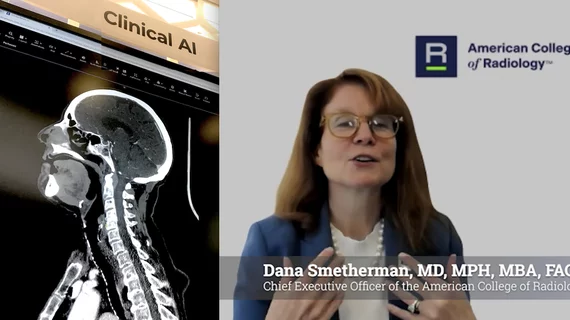
CEO Dana Smetherman, MD, MPH, MBA, explains American College of Radiology efforts to help members understand and enable easier integration of artificial intelligence.
Artificial intelligence's role in day-to-day patient care continues to grow. What should health systems and cardiology departments be thinking about as they shop for new technologies?
Dana Smetherman, MD, CEO of the American College of Radiology, says the organization wants to see transparent explainability of algorithms to increase public trust.
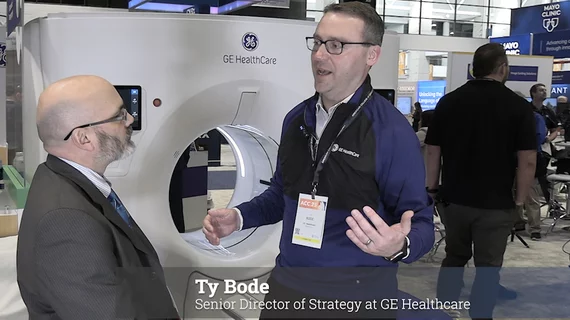
As cardiac CT continues to get used more and more, GE HealthCare has launched a new scanner designed to meet the needs of both outpatient imaging centers and larger hospitals.
Jason Poff, MD, director of innovation deployment for artificial intelligence at Radiology Partners, explains the process he uses to evaluate medical imaging AI.
Nina Kottler, MD, associate CMO for clinical AI at Radiology Partners, explains the movement toward greater regulation of artificial intelligence and the need to test for bias.
To fully leverage today's radiology IT systems, standardization is a necessity. Steve Rankin, chief strategy officer for Enlitic, explains how artificial intelligence can help.
Stephen Browning, the FDA's assistant director of hemodynamics and heart failure diagnostics, spoke with Cardiovascular Business about the agency's perspective on AI-enabled cardiovascular devices and many other topics.
FDA Commissioner Robert Califf, MD, explains the need for hospitals to perform quality assurance checks on clinical artificial intelligence to ensure these technologies don't "drift" from what was originally cleared by the FDA.
Dana Smetherman, MD, CEO of the American College of Radiology, explains resources available through its Data Science Institute to evaluate and validate the quality of imaging algorithms.