Also called personalized medicine, this evolving field makes use of an individual’s genes, lifestyle, environment and other factors to identify unique disease risks and guide treatment decision-making.
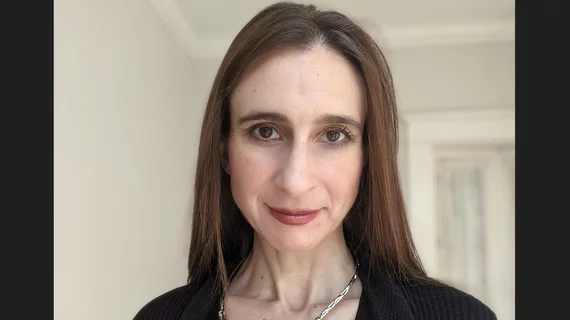
Cynthia Rudin, PhD, is a highly regarded computer scientist who’s been eyeing the advance of artificial intelligence into society with equal parts enthusiasm and concern.
By now it’s a difficult-to-dispute likelihood: AI won’t replace doctors making diagnoses, but doctors who use AI will displace doctors who don’t use AI. The hypothesis gets a fresh airing out from the vantage point of the general public.
The use of iodinated- and gadolinium-based contrast agents, which are frequently used during CT and MRI scans, has a low rate of adverse effects on patients, according to a study in the October issue of the American Journal of Roentgenology.
There is increasing acceptance of e-prescribing in Europe and system sales should more than triple in the next six years, according to a report on the technology by market research firm Frost & Sullivan.
A survey by the research firm KLAS on customer satisfaction with staff scheduling software solutions has found significant differences of opinion among stakeholders, including finance, IT and nursing departments.
Researchers at Johns Hopkins University and the University of Illinois have found that a one-minute eye exam performed at bedside works better than an MRI exam in distinguishing new strokes from other less serious disorders in patients complaining of dizziness, nausea and spinning sensations, according to findings published online ahead of print in the journal Stroke.
The Senate Finance Committee, chaired by Sen. Max Baucus, D-Mont., issued its long-awaited Americas Healthy Future Act of 2009 on Wednesday, which would cost $856 billion over 10 years, and is scheduled to begin committee action on Sept. 22.
Developments in imaging technology and software continue to help cardiac MRI exams gain prominence in the medical imaging market and will drive global sales of the technology to a projected $605 million in 2012, according to a report by healthcare market research firm Kalorama Information.
A difference in brain activity patterns may explain why some people are able to maintain a significant weight loss while others regain the weight, according to a functional MRI (fMRI) study published last month in the American Journal of Clinical Nutrition.
MRI can help monitor carotid vessel wall volume changes over time and identify factors that contribute to changes, according to a study in this months issue of Radiology. In addition, researchers found that patients not receiving statin therapy had a faster increase in vessel wall volume changes.