Also called personalized medicine, this evolving field makes use of an individual’s genes, lifestyle, environment and other factors to identify unique disease risks and guide treatment decision-making.
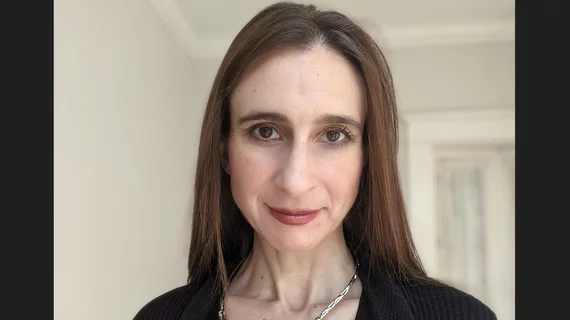
Cynthia Rudin, PhD, is a highly regarded computer scientist who’s been eyeing the advance of artificial intelligence into society with equal parts enthusiasm and concern.
By now it’s a difficult-to-dispute likelihood: AI won’t replace doctors making diagnoses, but doctors who use AI will displace doctors who don’t use AI. The hypothesis gets a fresh airing out from the vantage point of the general public.
St. Jude Medical and iRhythm Technologies have entered into an agreement to market iRhythms Zio Patch, a single-use ambulatory cardiac rhythm monitor that recently received FDA 510k clearance.
The National Research Council Institute (NRC) for Biodiagnostics and Zurich-based Schmid & Partner Engineering (SPEAG) has partnered to offer a combined NRC-SPEAG software platform for MRI scanner design.
Information can travel at light speed, yet when it comes to electronic exchange of health information, railroads were mentioned in both of the interviews that top this months Integration Tools & Interoperability Newsletter.
The Department of Health and Human Services' (HHS) Office of the National Coordinator for Health IT is seeking patient perceptions of the delivery of healthcare through the use of an EHR.
Patients who receive hypofractionated stereotactic radiotherapy for their recurrent brain cancers live longer lives, according to a study published online May 17 in the Journal of Clinical Oncology.
Blue Cross & Blue Shield of Rhode Island (BCBSRI) has entered into an agreement with the Rhode Island Primary Care Physicians Corporation to establish the largest patient-centered medical home program in R.I.