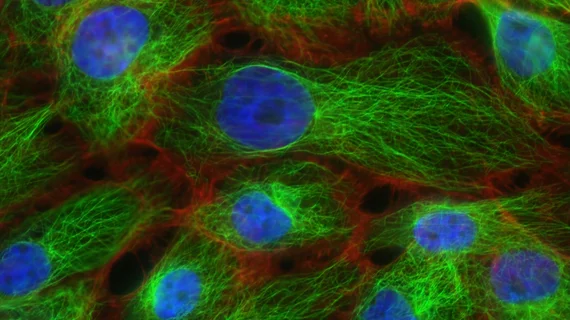
Also called personalized medicine, this evolving field makes use of an individual’s genes, lifestyle, environment and other factors to identify unique disease risks and guide treatment decision-making.
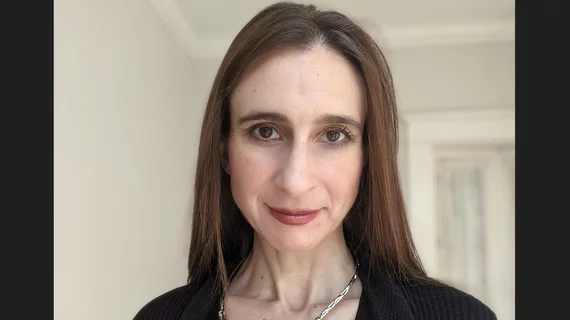
Cynthia Rudin, PhD, is a highly regarded computer scientist who’s been eyeing the advance of artificial intelligence into society with equal parts enthusiasm and concern.
By now it’s a difficult-to-dispute likelihood: AI won’t replace doctors making diagnoses, but doctors who use AI will displace doctors who don’t use AI. The hypothesis gets a fresh airing out from the vantage point of the general public.
Emerging technologies like AI and robotics have vast potential to improve healthcare. Few question this. What remains unclear is how meaningful the advances will be to healthcare providers and, more to the point, the patients they serve.
Geisinger has tapped IBM’s AI expertise and come up with a way to predict hospital patients’ risk of sepsis. In the process, the method can increase chances of survival in those who have the tricky and potentially life-threatening condition.
A single heartbeat is all a new neural-network technique needs to detect heart failure with 100% accuracy, according to a study slated for January 2020 publication in Biomedical Signal Processing and Control Journal.
There’s still a long way to go with both research into Alzheimer’s disease and AI tools to help detect it, but deep-learning approaches continue to show promise for classifying the condition on images of the brain.
When patients and family members discuss end-of-life matters with professional caregivers, the silences between words can be as telling as the words themselves.