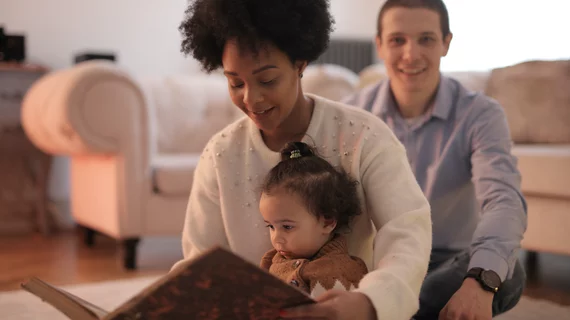
Also called personalized medicine, this evolving field makes use of an individual’s genes, lifestyle, environment and other factors to identify unique disease risks and guide treatment decision-making.
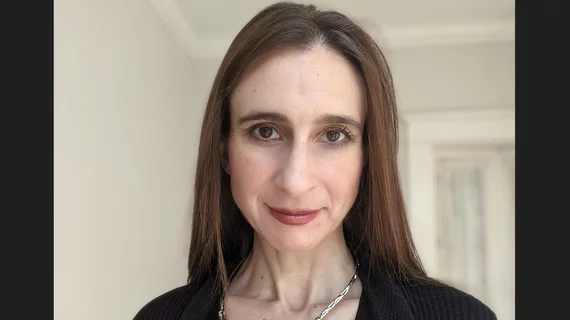
Cynthia Rudin, PhD, is a highly regarded computer scientist who’s been eyeing the advance of artificial intelligence into society with equal parts enthusiasm and concern.
By now it’s a difficult-to-dispute likelihood: AI won’t replace doctors making diagnoses, but doctors who use AI will displace doctors who don’t use AI. The hypothesis gets a fresh airing out from the vantage point of the general public.
AI can detect brain hemorrhages in CT scans more accurately than some radiologists, according to new findings published by Proceedings of the National Academy of Sciences.
Deep learning algorithms can be trained to flag suspicious chest x-rays in an emergency department (ED) setting, according to new research published in Radiology.
Researchers have trained a machine learning model to identify patients with familial hypercholesterolemia (FH), a genetic disorder that increases a person’s risk of coronary artery disease.
Deep learning can be used to predict the future hospitalization of pediatric patients, according to new research published in the American Journal of Managed Care.
Working alongside machine learning technology can help radiologists detect more breast cancers, according to new findings published in IEEE Transactions on Medical Imaging.