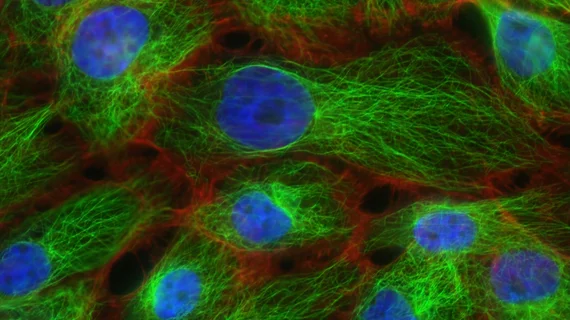
Also called personalized medicine, this evolving field makes use of an individual’s genes, lifestyle, environment and other factors to identify unique disease risks and guide treatment decision-making.
Cynthia Rudin, PhD, is a highly regarded computer scientist who’s been eyeing the advance of artificial intelligence into society with equal parts enthusiasm and concern.
By now it’s a difficult-to-dispute likelihood: AI won’t replace doctors making diagnoses, but doctors who use AI will displace doctors who don’t use AI. The hypothesis gets a fresh airing out from the vantage point of the general public.
Children’s National Health System has chosen Artifact Health’s mobile physician query solution to improve their quality of patient records and ensure full reimbursement.
An implantable continuous glucose monitor was shown to be safe and accurate in patients with type 1 and 2 diabetes, according to a study published in Diabetes Technology & Therapeutics.
Scientists from Britain and the United States have developed the first human eggs to grow from the early stages in ovarian tissue to full maturity in a laboratory.
Patients with diabetes who utilize mobile health technology (mHealth) to assist in lifestyle changes and self-management experienced improved outcomes, according to a study published in JMIR mHealth and uHealth.
Electronic patient portals have been increasingly utilized in the past few years, according to a study published in the Journal of Medical Internet Research.
Utilizing the mPulse Mobile interactive text messaging application resulted in a 14 percent increase in medication adherence in partially or nonadherent Medicare patients, according to a study published in JMIR mHealth and uHealth.
Abbott has announced the release of its FreeStyle LibreLink application in Europe. The implementation of new features allows users to access glucose data directly from their smartphone.