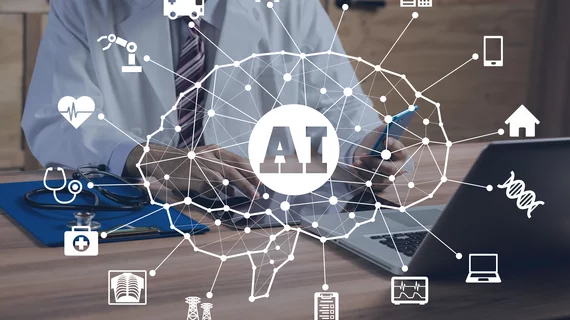
It is well known that AI has the potential to upend several areas of medicine, including targeted treatment and diagnostics. However, a lack of knowledge about AI in the healthcare space could have a negative effect, through the spread of misinformation––and fake news.
Researchers studying the basis of visual recognition in two distinct disciplines—computer science and brain science—have put their heads together to advance both fields at once.
Accenture, a global professional services company, has teamed up with Stockholm Exergi, one of Sweden’s largest energy suppliers, to put AI to the test in a new project aimed at addressing loneliness among seniors.
Options are increasing for healthcare consumers looking to check their symptoms with an AI digital platform for self-diagnosis. However, research into the use, accuracy and regulation of these technologies is woefully scant.
A pilot that aims to study the use of blockchain-enabled data technology to track and verify specialty prescription drugs has been approved by the FDA.
Researchers are looking into whether live and automated text messaging augmented by AI can help treat or ward off postpartum depression for women in Kenya.
A Harvard undergrad has created a computer program that can improve the treatment of tuberculosis, an infectious disease with unique challenges thanks to its shapeshifting ability to resist drugs.
Blockchain technology is already expected to have a major impact in the healthcare space, and the wearables sector could do with an injection of the technology, as well, writes Lucas Mearian for ComputerWorld.