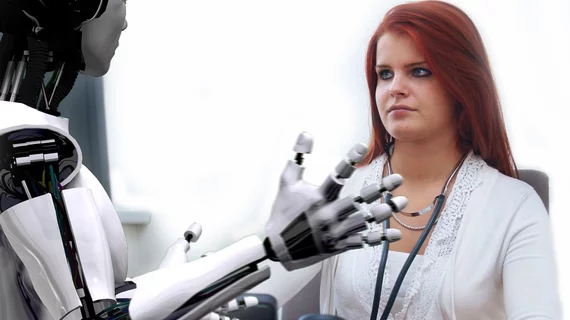
Healthcare consumers see AI-delivered healthcare as standardized and therefore neglectful of patients’ individual needs, which is one reason they tend to be less accepting of healthcare delivered by AI than that provided by humans.
Advancing its interest in AI for smart homes, Google has filed a patent for AI technology that would monitor babies by tracking their vocalizations as well as their eye and body movements.
While much of the attention paid to AI in healthcare has focused on applications to improve care and the administration thereof, industry players have quietly begun tapping the technology to boost sales of their healthcare wares.
There’s still a long way to go with both research into Alzheimer’s disease and AI tools to help detect it, but deep-learning approaches continue to show promise for classifying the condition on images of the brain.
Sleep apnea can be diagnosed with good accuracy by AI analysis of spectrograms—sounds rendered as images—after recording patients’ breathing patterns as they sleep. And the finding may lead to improvements in at-home apnea test devices.
When patients and family members discuss end-of-life matters with professional caregivers, the silences between words can be as telling as the words themselves.
A health-management company in Arizona is expanding its use of AI to detect risk factors in Medicare Advantage patients by scanning doctors’ notes to automatically flag patients who need additional reimbursable care.