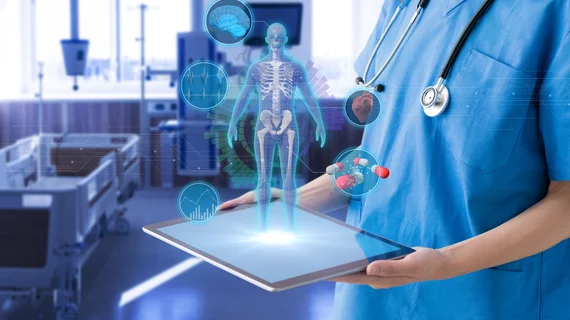
Researchers from the University of California Irvine (UCI) School of Medicine have received $1.2 million to study the potential psychological impact of augmented reality (AR) medical simulation training.
Students can use virtual reality (VR) training to learn about radiographic hand positioning skills, according to a new study published in Radiography. How would this compare to other training techniques?
Exploring electronic medical records (EMRs) can help healthcare providers learn more about typical treatment patterns for specific situations, according to new findings published in Artificial Intelligence in Medicine.
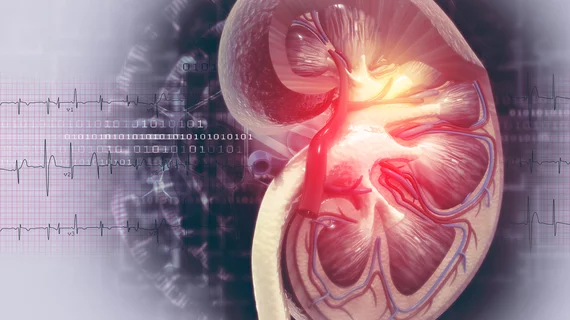
Deep learning could potentially assist healthcare providers with the evaluation of small renal masses detected on certain contrast-enhanced CT exams, according to a new study published in the American Journal of Roentgenology.
Machine learning (ML) technology has gained popularity in recent years, but its use in healthcare remains largely limited to proof-of-concept academic studies, according to a new study published in Artificial Intelligence in Medicine.
Researchers have developed a deep learning system capable of evaluating tissue samples and diagnosing prostate cancer at a level comparable with many pathologists.
Zipnosis, a Minneapolis, Minnesota-based healthcare technology company, has kicked off a new partnership with GYANT, a San Francisco-based company focused on improving physician-patient communication with AI.